
From Crime to Broadmoor
The Surgeon of CrowthorneThis thread traces how William Chester Minor’s delusions shaped the murder of George Merrett, the trial’s insanity verdict, and Minor’s transfer into long-term confinement.
increasing Bearing strength in each event
 decreasing
Bearing strength in each eventdecreasingA Life in Fear
Persecution Takes Hold
Arrival in London
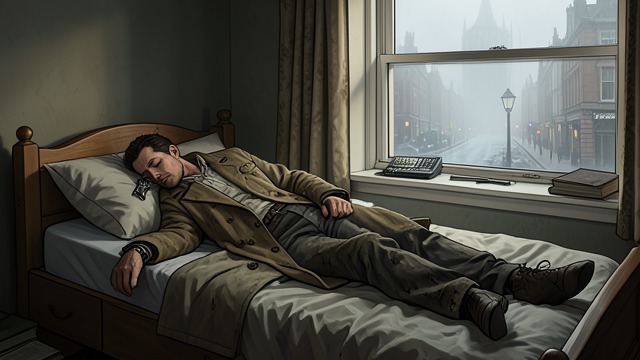
After leaving the United States, William Chester Minor settled in London and took rooms in Lambeth. He was already convinced that unseen intruders were targeting him, and his fears increasingly focused on Irish men whom he imagined to be conspiring against him.
A loaded precaution
Minor slept with a revolver under his pillow, believing that armed vigilance could protect him from imagined assaults. The weapon turned a private delusion into a danger for anyone he mistook for a persecutor.
The Shooting on Belvedere Road

A Fatal Mistake
An imagined intruder
Minor believed that a man had entered his room and fled into the night. He pursued a passerby, George Merrett, and fired several shots, convinced he was stopping the person who had supposedly attacked him.
Immediate aftermath
Police constable Henry Tarrant arrested Minor at the scene, while others rushed the wounded Merrett to hospital. Merrett died from his injuries, leaving his pregnant wife and children; an episode rooted in delusion had become a real and irreversible loss.
Trial and Insanity Verdict
Responsibility in Question
Evidence of delusion
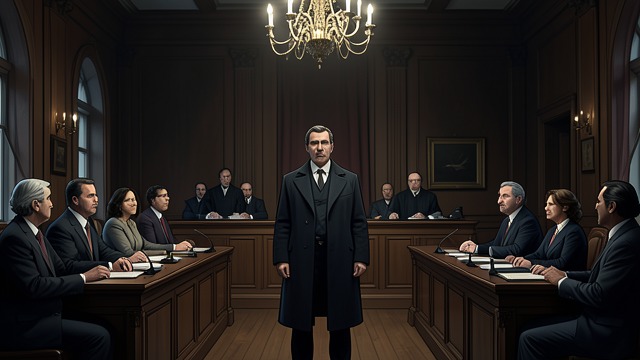
At trial, witnesses described Minor’s longstanding fears of intruders and persecution. His own account showed that he had mistaken Merrett for an imagined attacker, while evidence from his earlier life reinforced the picture of a severely disordered mind.
The court’s decision
Under the M’Naghten Rules, the jury found Minor not guilty on grounds of insanity. The verdict did not undo the killing or free him; the judge ordered his detention until the Crown’s pleasure should be known, leaving the state to determine how to contain him.
Transfer to Broadmoor
An Asylum as Sentence
Arrival under guard
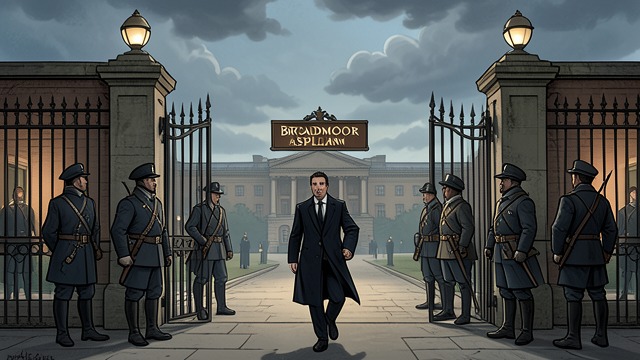
Minor was transported from custody to Broadmoor, a new institution designed to hold people found criminally insane. Admission formalities recorded his education and medical training alongside the danger officials believed he presented.
A bounded new life
The asylum placed Minor in a relatively comfortable block rather than its most restrictive wing. Comfort, however, did not change the basic fact of his confinement: the court’s open-ended order made Broadmoor his home for decades.
A Crime’s Continuing Cost
Consequences Beyond the Verdict
Bereavement and poverty
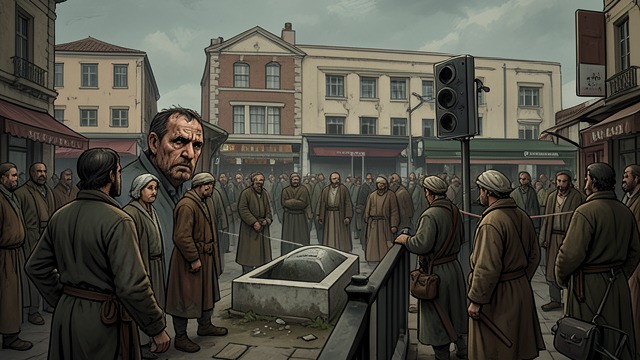
George Merrett’s death left Eliza Merrett with a large family and little money. Public collections and support from Americans helped the household, but the loss transformed the lives of people who had played no part in Minor’s delusions.
Memory and accountability
Minor later expressed remorse and tried to provide financial help, but the assistance could not restore the life taken or erase the family’s hardship. The narrative’s return to Merrett’s unmarked grave insists that the dictionary story must not eclipse the person whose death set so much else in motion.
Late 1871–February 1872, in London
17 February 1872, shortly after 2 a.m.
April 1872, at Kingston Assizes
17 April 1872, at Crowthorne
Late 1870s onward, after the trial
